| Date: | Thursday, September 05, 2024 1:00 PM EDT |
|---|---|
| Length: | 60 Minutes |
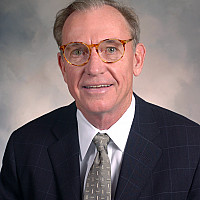
| Expert: | Pete Tosh |
| Event Type: | Recorded Webinar |
Fortune 500 companies and small family businesses alike share a business need - ensuring that they have the talent necessary to effectively lead their organizations in the future. One of the most significant contributions a leader can make is ensuring his/her business’ continuity and sustainability - by having employees who are willing and capable of filling each key position with a plan for doing so when the need arises.
Succession Planning is a:
The deliberate, systematic process of anticipating the need for talent and ensuring that the necessary employee competencies and experience are available when needed in the future
A strategic approach for avoiding an undersupply of talent, enhancing the organization’s current talent pool, and meeting its future needs
Not having a Succession Plan can be costly and sometimes disastrous; it is expensive to recruit, interview, select, onboard, and train a new leader, and significant opportunity costs are incurred when a key job is not being performed.
Learning Objectives:-
The primary objectives for and deliverables of a Succession Planning program are to:
Sustain the business through a deliberate and systematic effort to anticipate and ensure leadership continuity in key positions
Retain and develop the organization's high potential [HiPos]
Encourage individual development by:
Identifying career paths
Conducting formal performance appraisals
Providing daily coaching
Creating Individualized Development Plans [IDPs]
Areas Covered:-
Succession Plan Defined
A deliberate, systematic process of anticipating the need for talent and ensuring that the necessary employee competencies and experience are available when needed
A strategic approach for avoiding an undersupply of talent, enhancing the organization’s current talent pool, and meeting the organization’s future needs
Objectives and Benefits of Succession Planning
Sustain the business through a systematic effort to ensure leadership continuity in key positions
Attract, retain & develop high potentials [HiPos]
Encourage HiPos development by:
Identifying career paths
Conducting performance appraisals
Providing daily coaching
Creating Individualized Development Plans [IDPs]
Holding Talent Review meetings
Tools and Processes Commonly Utilized for Developing and Implementing
Self-appraisals and career goals
Performance appraisals, 360 feedback, and ratings
Assessment instruments
GE grid
Individual development plans [IDPs]
HiPo talent development interventions
Talent review meetings
What an Organization, its Leaders, and the Program Participants Need to Do To Achieve an Effective Plan
What an organization needs to do:
Supply funding/budget
Establish a sharp vision and guidance for the program
Develop a formal, written program
Announce the objectives of the program to all employees
Ensure that all leaders and managers support the program
What the leaders need to do:
Have job descriptions developed for their teams
Conduct effective, formal performance appraisals
Identify employee developmental areas
Share their knowledge and experience
Involve employees in more of the leader's responsibilities
Facilitate the completion of IDPs for all Hi Pos
What the program participants need to do:
Develop the employees reporting to them – so they have successors
Complete their IDPs
Perform to their capabilities
Learn as much as they can about potential future assignments
Identify their desired career paths
Conduct self-appraisals
Potential Measures of the Program’s Success
Whether there is, at least, one successor for each key position
Having developmental goals and IDPs established for each successor
Determining how much of their manager’s job the successors can perform
Determining whether successors can perform their manager’s jobs when they are unavailable and evaluating their performance during those times.
Why Should You Attend:-
During Succession Planning Programs:
At the macro level, the organization is proactively determining:
The talent needed in the future
The talent it has now
Where there are talent gaps
The initiatives necessary to close those gaps
At the micro level, the organization is addressing - for each of its key positions - questions such as:
What the organization would do if it had to fill the position tomorrow
Whether there is, at least, one successor who could immediately perform the duties of the position
If there is no successor ready now, what will need to be done to enable the best internal candidate to be ready and when can he/she be ready
Can the organization afford to wait or would it be better to recruit a successor, etc?
Experience has found the following two processes to be highly effective in enabling organizations to have the talent they need when it is needed:
Performance Management and/or 360 Feedback Processes - through which the organization is able to:
Evaluate its employees’ current performance – based on documented, objective performance and achievements
Assess its employees’ advancement potential
Determine its employees’ current readiness for advancement
Obtain from its employees self-appraisals identifying their developmental needs and preferred career plans
Meet its bench strength needs by initiating Individual Development Plans and experiences - at least, for its A Players and/or High Potentials - such as:
Special or stretch projects
Assignments in other depts./job rotations
‘Try-out/popcorn stand’ slots
Mentors
Formal training and development initiatives
Fast-track programs with exposure to other functions
Intense coaching, etc.
Track their A Players’ and High Potentials’ performance and advancement potential against a Performance-Potential Grid.
Talent Review Meetings – during which the executive team in a disciplined fashion:
Ask each leader to report on the status of the Individual Development Plans for each of their A Players and High Potentials
Ensure that each A Player and High Potential is receiving regular coaching and is actively involved in opportunities that will help retain them while accelerating their development
Drives the organization past ‘business as usual’ by ensuring that its future needs for human capital are identified and will be satisfied when the time arrives – as it will
Succession Planning initiatives also increase the levels of engagement and performance of your A Players and High Potentials – the talent your organization will most need in the future.
Who Should Attend:-
HR Professionals New to the Field - seeking a comprehensive view of the subject with multiple application initiatives
Experienced HR Professionals - seeking a refresher
Leaders and Managers - interested in understanding both how a Succession Plan benefits an organization and how to implement one
Pete Tosh is the Founder of The Focus Group, a management consulting and training firm that assists organizations in sustaining profitable growth through four core disciplines:
The Focus Group has provided these consulting and training services to manufacturing and service organizations across the U.S., Canada, Europe, and the Middle East. Pete has worked closely with the leadership teams of organizations such as Exxon, Brinks, EMC, State Farm, Marriott, and N.C.I. YKK and Freddie Mac
Prior to founding his own firm 25 years ago, Pete had 15 years of experience — at the divisional and corporate levels — in Human Resource and Quality functions. Pete held leadership positions — including the V.P. of Human Resources and Quality — with Allied Signal, Imperial Chemical Industries, Reynolds Metals, Charter Medical, and Access Integrated Networks.
Pete holds a B.A. degree in Psychology from Emory and Henry College and Masters's degree in both Business Administration and Industrial Psychology from Virginia Commonwealth University. Pete is also co-author of Leading Your Organization to the Next Level: the Core Disciplines of Sustained Profitable Growth.